


WHEN NOBODY WAS WATCHING: A Childhood Shaped by Neglect, Part 1
In the first installment of a four-part series, a Generation X writer reflects on childhood poverty, abuse and neglect — and the lasting consequences of growing up without protection or support.
By Shane Raine
The Advocate
Content Advisory: This personal essay discusses childhood abuse, neglect and poverty. The four-part series also includes references to sexual assault.
There is a fundamental and profound failing in the education system in the United States. If you were not born into privilege, it’s not very likely that you’ll receive a quality education. If someone experiences severe trauma such as poverty or child abuse, chances are that they won’t receive a good education either. The way I see it, education in the United States is treated as a privilege not a right. And I believe that inequality is by design.
In this four-part series, I intend to share my story.
This is not a story about how I overcame adversity, got an education and achieved the American dream. Quite the opposite. I’m a member of Generation X, the forgotten and ignored generation. Like so many others from m
y generation, I experienced neglect and abuse. Nobody stopped to ask what that neglect would cost. Nobody concerned themselves with the harm that neglect inflicted upon us, or what it stole from us that we could never get back.
“Nobody stopped to ask what that neglect would cost.”
Many of us were exploited and abused because nobody was watching. We were forced to provide for ourselves by necessity, not by choice. So many of us shared similar experiences growing up. And they were horrendous. My story includes experiences of child abuse, neglect and sexual assault, subjects that may be difficult for some readers.
My story is not an easy one. It’s about growing up as a Gen X child who was failed by the adults and institutions that should have been there to support and protect me. I was born in Puyallup, Washington in 1972. I was told that my mother had a difficult birth. My father, Calvin, was a violent alcoholic. He was a Vietnam veteran who escaped the horrors of his post-traumatic stress disorder with a suitcase of Hamm’s beer every night.
My mother, Laura, was cold and distant. She never should have had children. My first memory was not being held and protected by my mother. It was of being struck by my father. I don’t remember why.
The first home I remember living in was in a low-cost housing project in Tacoma, Washington called Salishan. These units were dirty and cheap. Thin walls and always cold. I don’t remember ever being warm there. I attended Lister Elementary for Headstart and kindergarten. From there, my family moved into a house in South Tacoma on Yakima Street. And that’s where my story really begins.
My father was never able to hold down a steady job due to his PTSD, and my mother earned less than a teacher’s salary from the Tacoma school district. As a result, my family existed in chronic poverty.

The house we lived in was essentially a slum. The plumbing was exposed. I shared a space with cockroaches and rats. And I often woke up to my sister’s screams at night when a rat had run over her body while she was trying to sleep.
There was no food in the house either. When I came home from school hungry, there was never, ever, anything to eat. I developed severe food insecurity. Poverty on that level is profoundly traumatizing.
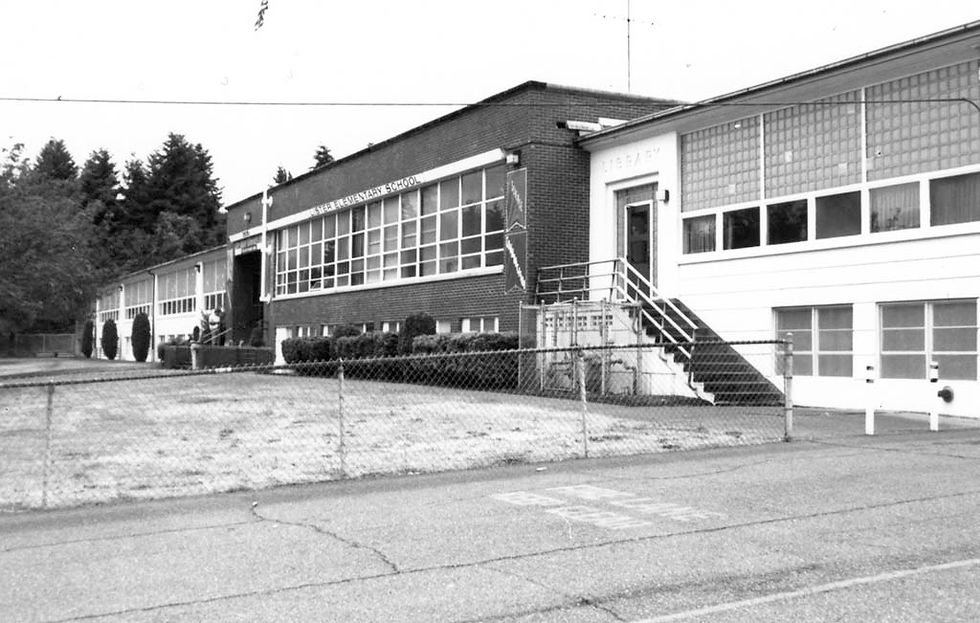
My sister and I qualified for free meals at school. In September 1978, all of us poor kids would line up at the far south end of the brick building that housed the gymnasium and the cafeteria. And that was where the 12-year torture fest I experienced in the Tacoma public school system began.
This story continues in the next issue of The Advocate.

Comments